
Clarks Originals x The Inoue Brothers Wallabee
Clarks Originals and The Inoue Brothers rework the Wallabee with Ryukyu indigo, Amami mud dye and hand-applied colour. Find out the background story in our review...


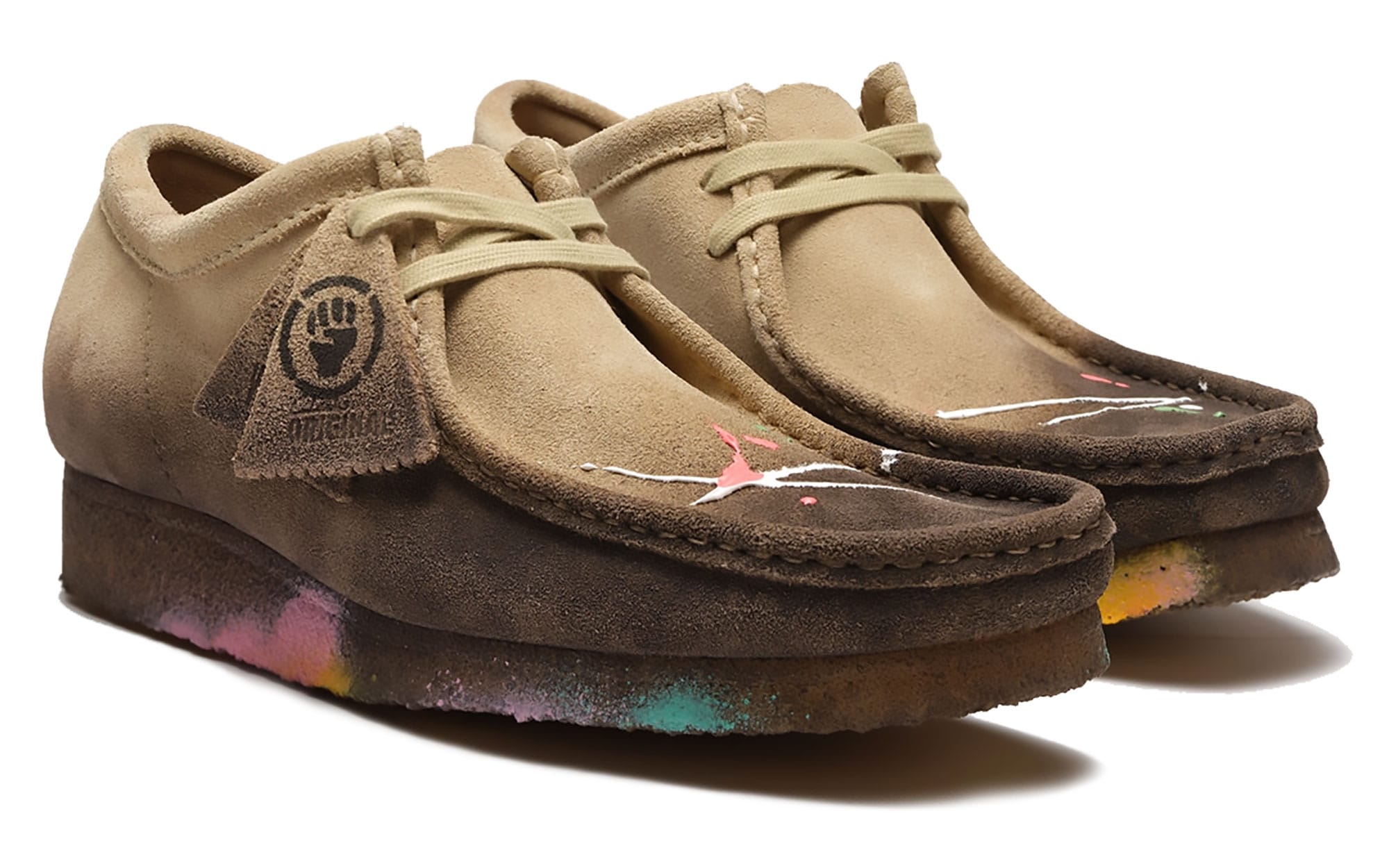
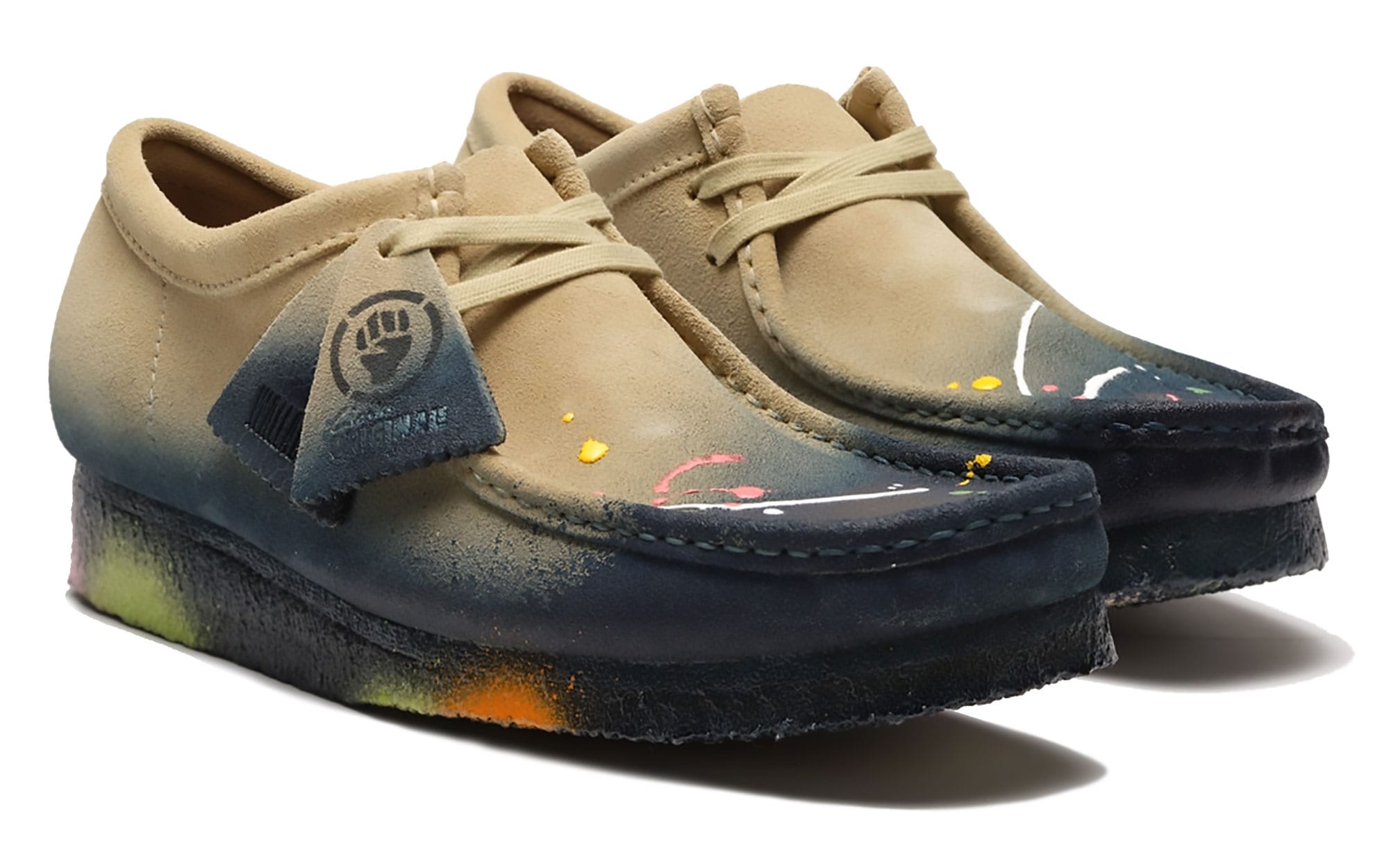
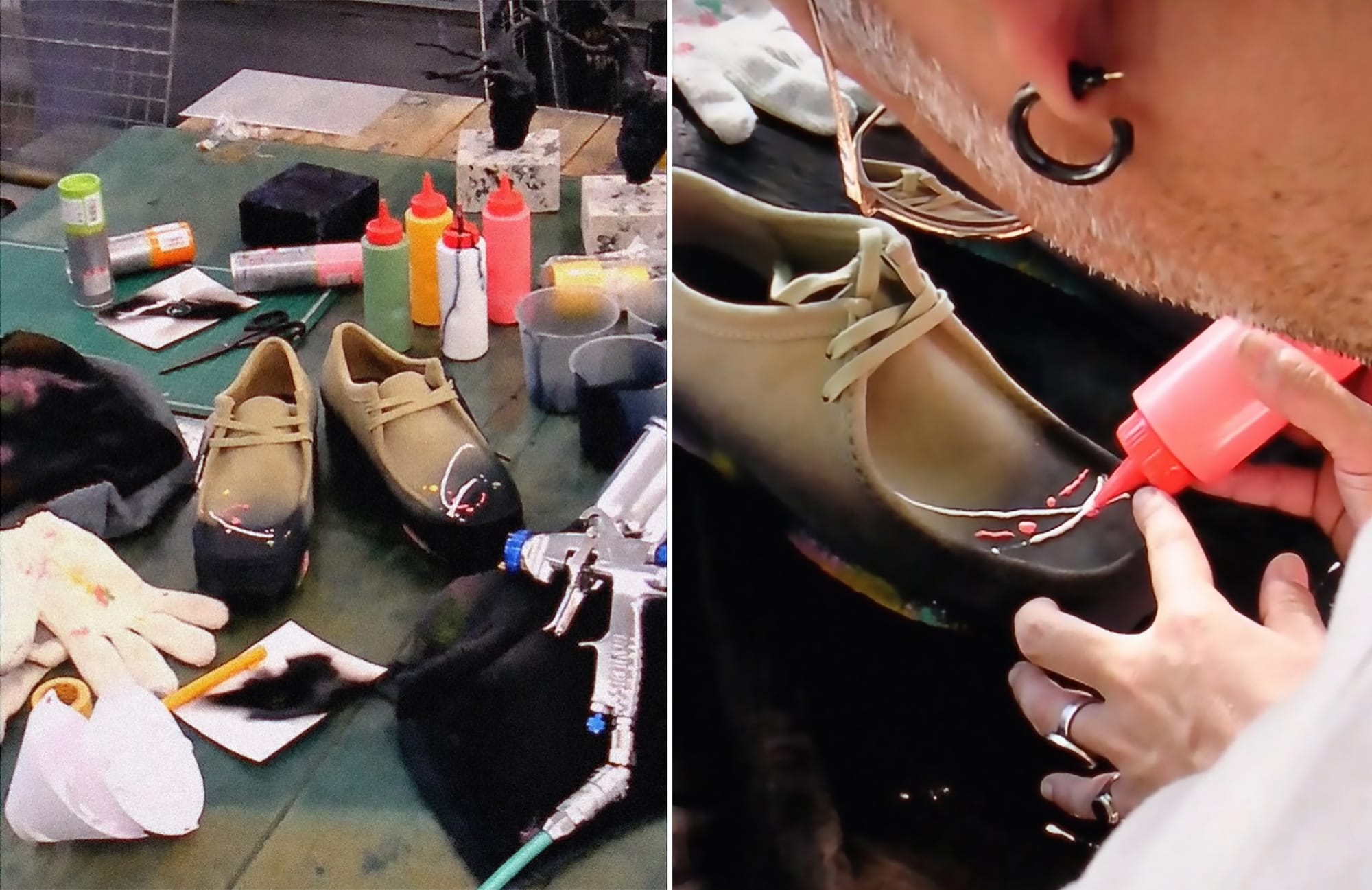
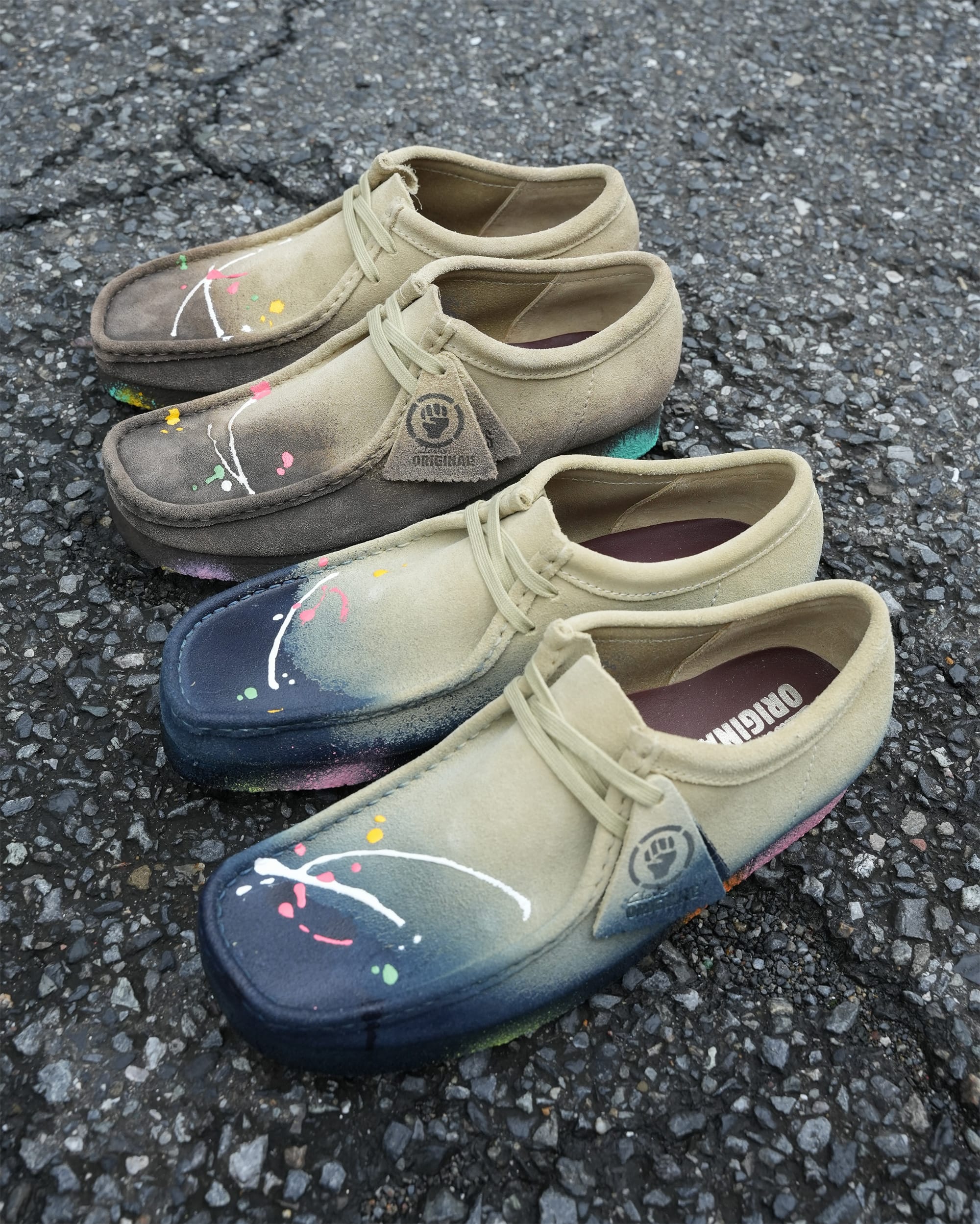
Clarks Originals and The Inoue Brothers state the simple facts: few shoes are as versatile or enduring as the Clarks Wallabee. Joining forces on this Japan-exclusive release, the collaboration project finds traditional natural dyeing techniques paired with contemporary street art aesthetics, with eye-catching results. There are two versions: Ryukyu indigo, made with the Ryukyu Ai Research Institute in Okinawa, and Amami mud dye, made with Kanai Kogei: a mud-dyeing (dorozome) studio located on Amami Ōshima Island in Kagoshima Prefecture, Japan. Both colourways receive vivid hand-applied drips: each pair is individually painted and numbered, and due to the handcrafted application, no two pairs will look exactly alike.
A Classic Shape With Cultural Weight
The Clarks Wallabee has enough solid history to carry bold reinterpretations that push the boundaries. As a silhouette, the Wallabee design goes as far back as 1968, when Lance Clark drew on the moccasin-like Sioux Grasshopper for inspiration. Originally manufactured in Kilkenny, Ireland, the crepe-soled, lace-up design was initially dismissed in Britain for being too unusual, especially compared to the traditional pointed and rounded dress shoes of the day.
Across the Atlantic, however, forward-thinking Americans embraced the foot-shaped design. Clarks marked its state-side arrival with North America’s largest billboard – a colossal 185-by-45-foot visual fanfare that touted the shoe as 'Tough 'n’Trendy'. Arriving Stateside with the same spirit of the late 1960s, the Wallabee became the footwear of choice for rebels, radicals and revolutionaries. The Wallabee also made its mark in Jamaica's pioneering music scenes during the 1960s and 1970s, becoming the shoe of choice for rudeboy and dancehall culture.
Back in the UK, Britain eventually caught on to the bold yet simple styling of the shoe. David Bowie and Iggy Pop were strong advocates, with Bowie notably wearing the design for his 'Soul Train' TV performance in 1975. Since then, the shoe has found itself being adopted by many different scenes and movements. Partnerships with icons such as the mighty Wu-Tang Clan and legendary graffiti writer Futura, alongside collaborative releases with Supreme, Stussy, Bape, Carhartt and many other reputable brands have ensured that the Clarks Wallabee is a permanent fixture on the street.
The Old To The New
Enough of the history lesson – let's talk about what we've got here. Created in collaboration with Okinawa’s Ryukyu Ai Research Institute and Amami Oshima’s Kanai Kogei, we find centuries-old dyeing traditions joining up with contemporary street art styling, demonstrated in the form of graffiti-style drips and paint splashes. The combination of organic dyes and paint being applied by hand ensures that every single pair is an unrepeatable piece of wearable art.
Raised in Denmark by Japanese parents, Satoshi and Kiyoshi Inoue founded The Inoue Brothers design and art studio in 2004. For this project, the brothers brought several influences and ideas to the table:
"For us, Wallabee is a place where tradition and modernity, Japan and Northern Europe, craft and the streets meet. Old School Meets New School. It is a pair of our roots and our thoughts on Clarks."
With this release, the Inoue Brothers have successfully bridged the gap between heritage craftsmanship and contemporary street culture – and they've executed it flawlessly.
The Bottom Line
The Clarks Originals x The Inoue Brothers Wallabee isn't going to be an easy purchase, especially if you live outside of Asia: only 200 serial-numbered pairs will be released and they're exclusive to Japan. Whilst we all wait for the unlikely news of a global release, you can check out the latest Clarks releases at END, via the banner below.